AI Interview Practice Free: How to Practise Before the Real Interview
Free guide to AI interview practice in 2026 - what "free practice" actually means, what the real interview tests that reading questions can't, and a 5-step plan that uses a free conversational AI.
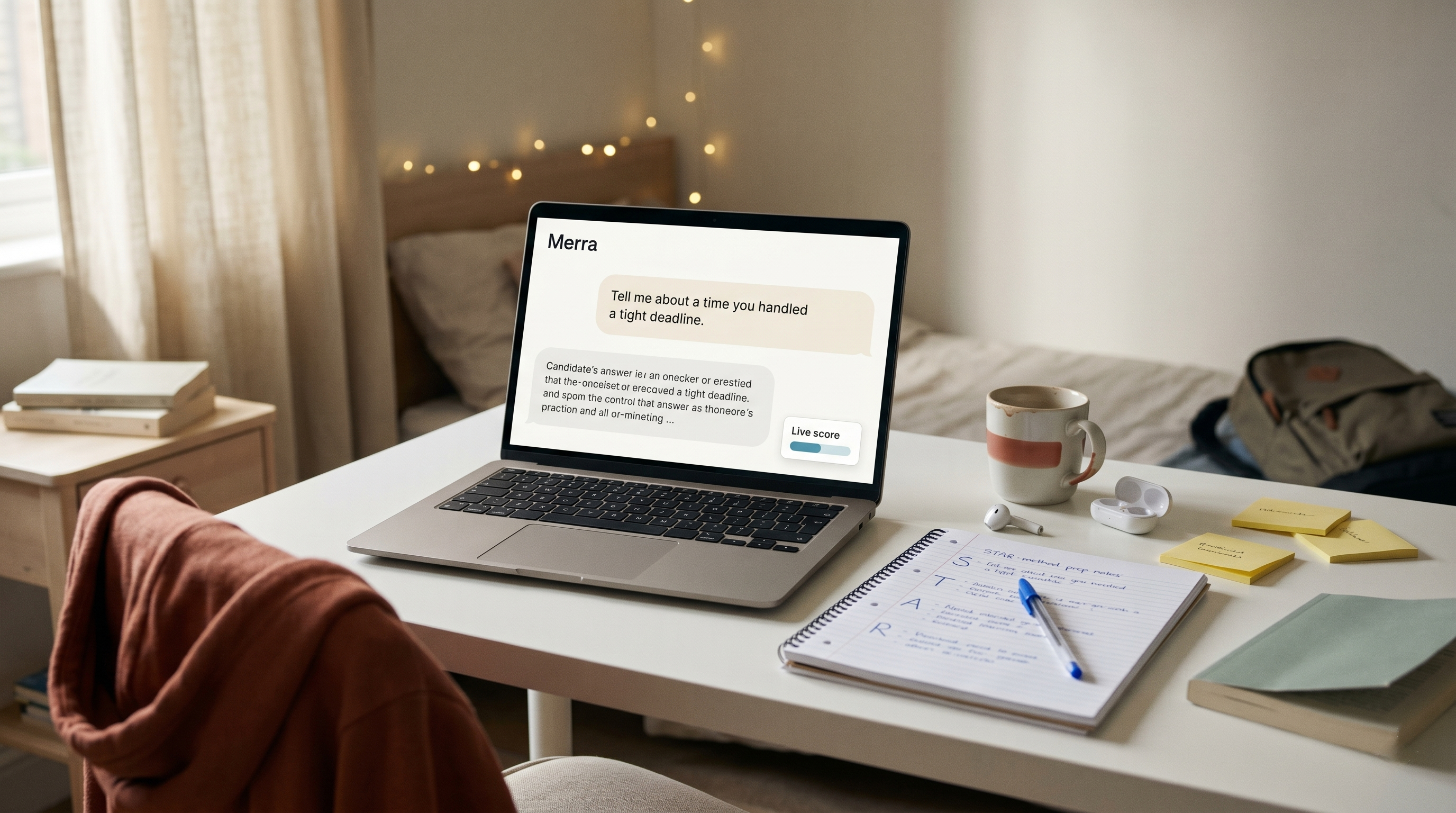
What "free practice" actually means in 2026
Search "AI interview practice free" and you'll find four kinds of things. They are not the same.
Question banks. Glassdoor, Indeed, careers blogs. Lists of questions reported by past candidates. Useful as a reading exercise, useless as a practice exercise. You read the question, you nod, you don't answer it out loud, and you certainly don't get interrupted halfway through.
YouTube tutorials. People explaining the STAR method, the 30-second prep window, what HireVue scores. Genuinely helpful for understanding the format. Genuinely useless as practice, because you're watching, not speaking.
ChatGPT mock interviews. Better than the first two, because at least you're typing or speaking answers. But ChatGPT will rarely cut you off, rarely push back on a weak answer the way a real interviewer would, and doesn't score you against the specific competencies the employer cares about. Most candidates leave a ChatGPT session feeling prepared, then get blindsided by the first follow-up in the real one.
Conversational AI interview practice. Same shape as the actual interview. The AI asks a question, listens, follows up if the answer's thin, scores the transcript, and gives you feedback. This is the only one of the four that trains the muscle you actually need.
You want the fourth one. The first three are reading material at best.
What the real interview tests that "reading the questions" doesn't
The reason candidates who feel "well prepared" still walk out of AI interviews shaken is that the real interview tests three things you can't rehearse silently:
Pacing under a timer. A 2-minute answer in your head feels different from a 2-minute answer out loud, into a webcam, with the timer running.
Recovery after a follow-up. The hardest moment in a real AI interview is the follow-up question that lands directly on the weakest part of your answer. "You said you stepped up - what did the rest of the team do?" If you've only practised by reading, you've never been there.
Whether your answer actually carries the evidence the AI is scoring. Modern AI interview platforms transcribe what you say and score the transcript against role-specific competencies. HireVue dropped facial analysis in 2021 and now scores transcripts only. Sapia and Paradox are text-based by design. So the words have to carry the evidence - clear situation, specific action you took, real result. You can't fix that by reading more questions.
A practice loop that doesn't include all three of these isn't really practice. It's revision.
The free practice plan that actually works
A real prep plan, written for someone with one week and zero budget. Five steps.
Step 1 - Map the role (15 minutes)
Open the job description and the careers page. Write down:
The competencies the employer names (problem-solving, customer focus, ownership, communication, etc.)
The format if you know it (HireVue one-way, conversational AI, AI-scored live)
The number of questions and time per question if the invite email tells you
Half the stress in an AI interview is uncertainty. Ten minutes of mapping removes most of it.
Step 2 - Build a 6-story bank (60 minutes)
Six concrete stories from the last 18 months, mapped to the competencies above. For each story, write down the situation in one line, the task in one line, the specific action you personally took (most of the story), and the measurable result. STAR.
Most behavioural AI interview questions are different doors into the same six stories. "Tell me about a time you led a team", "a time you took initiative", and "a time you stepped up" can all be the same project, framed differently. (Full breakdown of the 10 most common questions and how to map them to stories is in 10 Common AI Interview Questions and How to Answer Them.)
Step 3 - Run the conversational practice in coach mode (30 minutes)
Open Merra Practice. Free, no signup wall. Three routes depending on what you know about the role:
Amazon, Microsoft, Deloitte, PwC or KPMG: open that employer's tile in Top Company Prep and pick the role closest to yours. The interview is tuned to how that employer actually interviews.
Any other employer: use the Custom Interview option. Paste in the job title, level, the job description, and (if you can find them on Glassdoor or the careers subreddit) the specific behavioural questions you're expecting. Merra runs the whole thing as a tailored mock of that exact role.
Don't know the role yet: pick the Graduate / Early Careers interview type and choose the closest role family.
At the start of the session Merra asks whether you want Coach mode or Interview mode. Pick Coach mode first. Coach mode gives you feedback on each answer in real time and lets you redo and tighten the answer before moving on. This is where you build the answers.
Step 4 - Run it again in interview mode (30 minutes)
Same route, same role, same kind of questions. This time, when Merra asks at the start, pick Interview mode. Straight questions, real follow-ups, no pauses, no resets, the way a recruiter would push you. This is where you find out which of the answers you built in Step 3 actually hold up.
You'll get a transcript, a score, and feedback on which competencies you covered and which you ducked.
Step 5 - If the real interview is one-way video, add a self-recorded dry run
Conversational practice trains content and recovery. It doesn't train the specific skill of talking into a webcam with a 2-minute timer and no human to react to you. If you're heading into a one-way video interview (HireVue, Willo, or any employer that's configured a recorded format), add 30 minutes of self-recording at the end: open your laptop camera, pick five behavioural questions, give yourself 30 seconds prep and 2 minutes to answer, no re-records.
Watch them back twice - once with the sound off (do you look engaged?), once with the video minimised (does it sound structured as just audio?). Both checks matter. Full one-way-specific plan in HireVue Practice: What to Expect and How to Prepare for Free.
The 4 most common mistakes when practising free
1. Practising the questions instead of the stories
Reading 50 questions and nodding doesn't build any answers. Six well-rehearsed stories beat fifty half-thought questions every time.
2. Practising silently
The skill is talking out loud under time pressure. If you've never said the answer with your actual voice, you haven't practised. Reading the answer in your head is revision, not practice.
3. Only running coach mode
Coach mode is where you build the answers - tightened, polished, with feedback after each one. The real interview is interview mode: straight questions, real follow-ups, no resets. If you only ever run coach mode you'll arrive at the real interview without ever having held an answer together under actual pressure.
4. Stopping after one practice run
The first practice always sounds worse than you think it does. The second is where you actually start hearing yourself. The third is where the answers start to land cleanly. One run isn't enough.
The honest pitch for Merra Practice
The reason Merra Practice is the thing I'd point you at if you were a friend doing this for free: it's built on the same interview engine we built for employer-side first-round AI screening. It asks structured questions, listens, follows up if the answer is thin, and scores the transcript against role-specific competencies. That's the actual shape of the interview you're about to face.
It's free. There's no signup wall before you can run a session. You get a transcript, a score, and feedback after every run. You can run coach mode and interview mode as often as you want.
The honest catch: Merra Practice isn't the same engine as HireVue, Sapia, or Paradox - those are separate products run by separate companies. What it does match is the shape of a modern conversational AI interview: structured questions, real listening, follow-ups, transcript-based scoring against role competencies. The shape is the thing that matters for practice. The platform-specific quirks (HireVue's one-way recording rhythm, Sapia's text-only flow) need a thin extra layer on top, which is what the platform-specific guides on this site are for. The HireVue Practice guide covers the one-way format; more platform guides are on the way.
What to do tomorrow morning
If you've got an AI interview in the next two weeks:
Today, build the 6-story bank.
Tomorrow, run a Merra Practice session in coach mode.
The day after, run the same kind of session in interview mode.
If it's a one-way video format, finish with a 30-minute self-recorded dry run.
That's the whole free plan. Nothing about it requires paid coaching, a course, or a subscription. (And if you want the wider prep plan with story banks, room setup, and mistake patterns, the hub is How to Prepare for an AI Interview.)
Run the practice
🎯 Run a free AI practice interview on Merra Practice and get feedback before the real one counts.
Ahmed Ghelle is the founder of Merra, an AI interviewing platform that runs structured first-round interviews on every applicant and produces a recording, transcript, and scored evaluation for each one. He writes about hiring, evidence, and the difference between speed and signal.
Ready to ace your next interview?
Practise realistic mock interviews with conversational AI and get actionable feedback. Start with a free interview.
Start your free interviewsKeep reading
 Interview Tips
Interview Tips for 2026: How to Prepare, Answer Well and Make a Strong Impression
Practical interview tips for 2026: how to prepare stories, answer clearly, handle nerves, read the room, ask better questions and follow up after in-person, video or panel interviews with confidence.
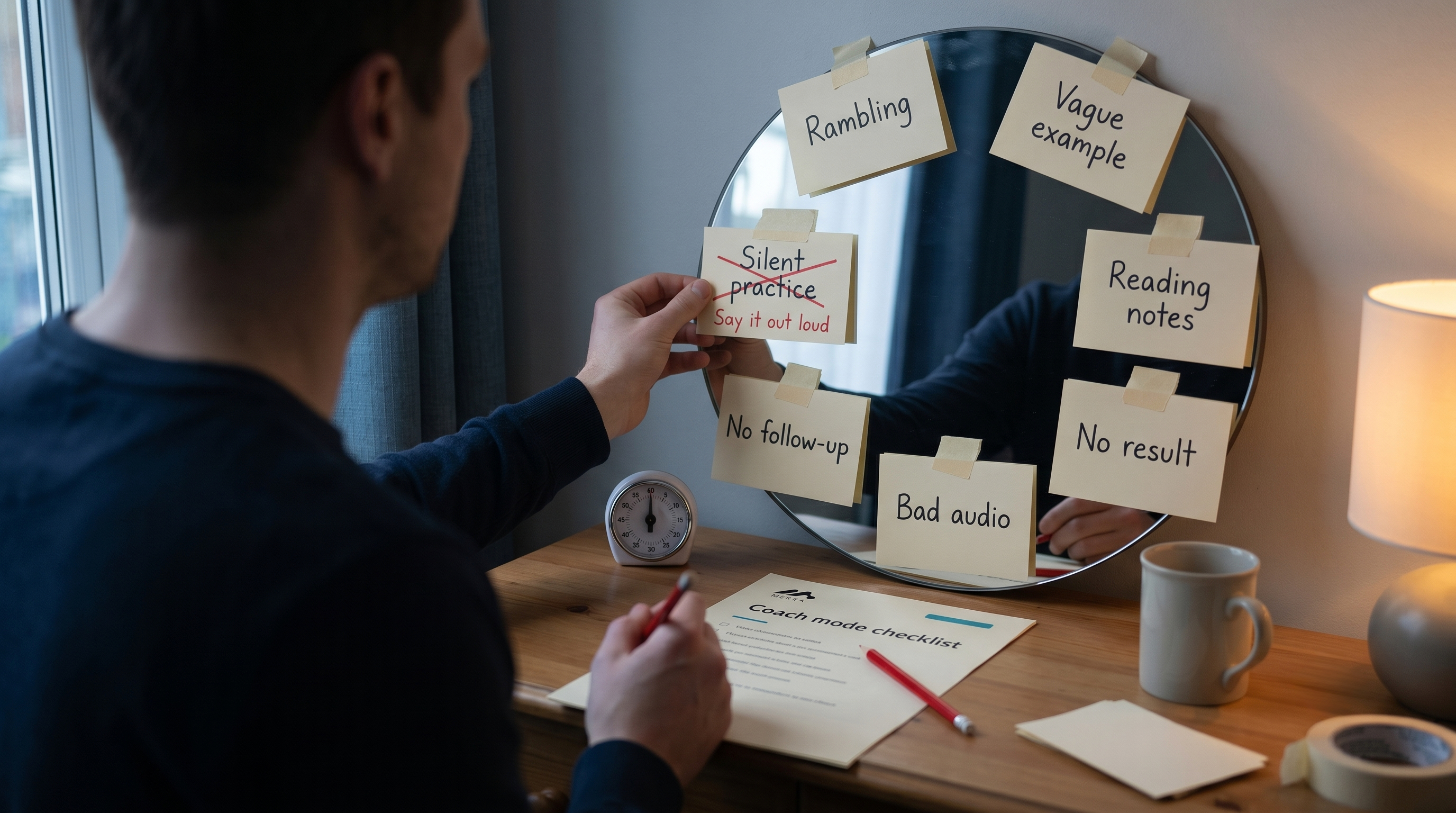 Interview Tips
How to Pass an AI Interview: 7 Things Candidates Get Wrong
Learn how to pass an AI interview in 2026 - seven mistakes candidates make, from rambling and weak examples to reading notes, poor setup and never practising out loud before the real interview starts.
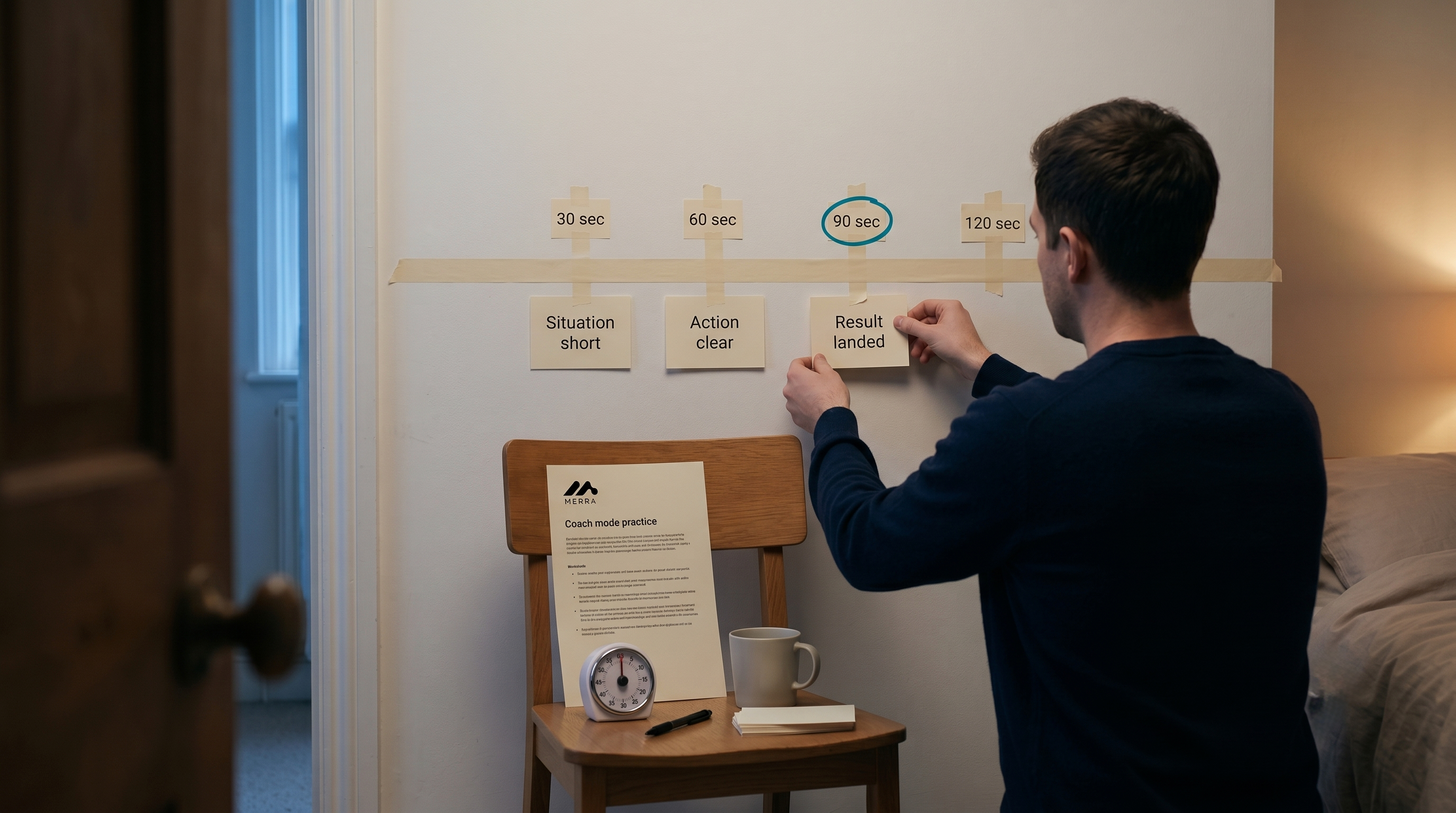 Interview Tips
How Long Should AI Interview Answers Be? The 60 to 90 Second Rule
Learn how long AI interview answers should be in 2026: when to use 30, 60, 90 or 120 seconds, how to pace STAR answers, avoid rambling and practise timed replies before the real interview starts now.